A school where children love to learn.
At their own pace, in their own way.
Because how a child learns shapes who they become.
Open House – Saturday, March 14, 2026
Come discover our school from the inside, meet the teaching team, and experience what it’s like to be a Montessori child through a personalized visit.
What’s included:
- guided tour of the three environments,
- observation of Montessori materials and teaching practices,
- one-on-one time with educators and current families,
- presentation of our approach, facilities, and educational vision.
➜ We can’t wait to welcome you! Spots are limited, so don’t forget to book yours.
What makes us different
If you’re here, you’ve probably felt it. Conventional school wasn’t quite the right fit. For your child, or maybe for you too.
Most families at our school had the same feeling. What they wanted was simple: a place that meets their child where they are, and gives them room to grow into who they’re meant to be.
A Montessori school built for today, and for tomorrow
The world moves fast. Children today will need confidence, adaptability, and a real sense of self to find their place in it.
Our mission is to give them an environment equal to that challenge. A place where they can discover who they are, explore freely, and learn to work with others. Where growing up feels safe, not stressful.
We welcome children and families as they are. If this feels right, you’re in the right place.
So what makes this place different?
• It starts with the people
Families, educators, and our parent association work together to build something that feels alive and human. When a child needs extra support, the whole community responds with a plan built around that specific child.
• The ratios help too
- One educator and one assistant for 10 to 12 children aged 2 to 4.
- Two educators and an intern for 20 to 25 children aged 3 to 6.
- Two educators for 20 to 25 children aged 6 to 12.
• Then there’s continuity.
From age 2 through 12, children grow within the same environment, with the same rhythm and the same familiar faces. That stability gives them the security to focus, take risks, and open up to the world. For families who have moved from another country, it also provides a real anchor during the transition.
And the results follow naturally. Children move forward when they are ready, and more often than not, they exceed the national curriculum expectations.


Discover our three environments

2 to 4 years old • Toddler House

3 to 6 years old • Children’s House

6 to 12 years old • Elementary
So what does Montessori actually look like here, day to day?
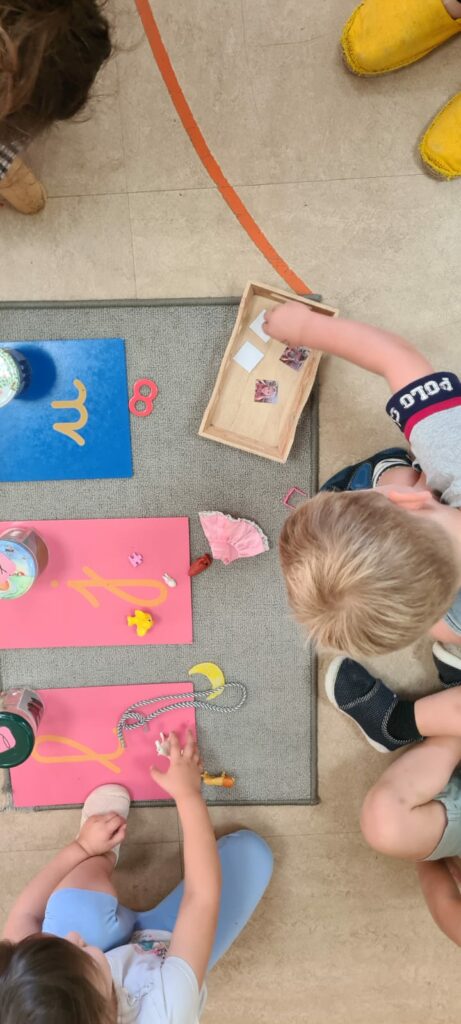
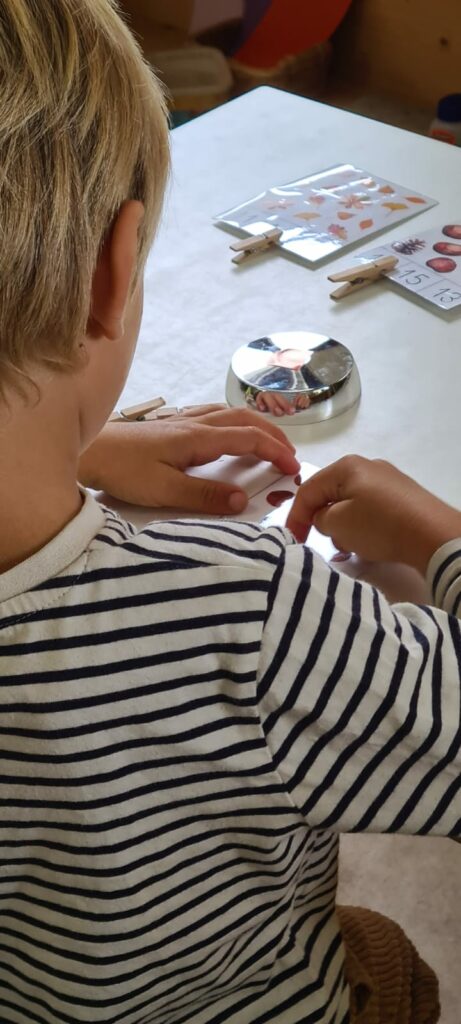
- Children choose their work,
- move freely,
- learn through doing.
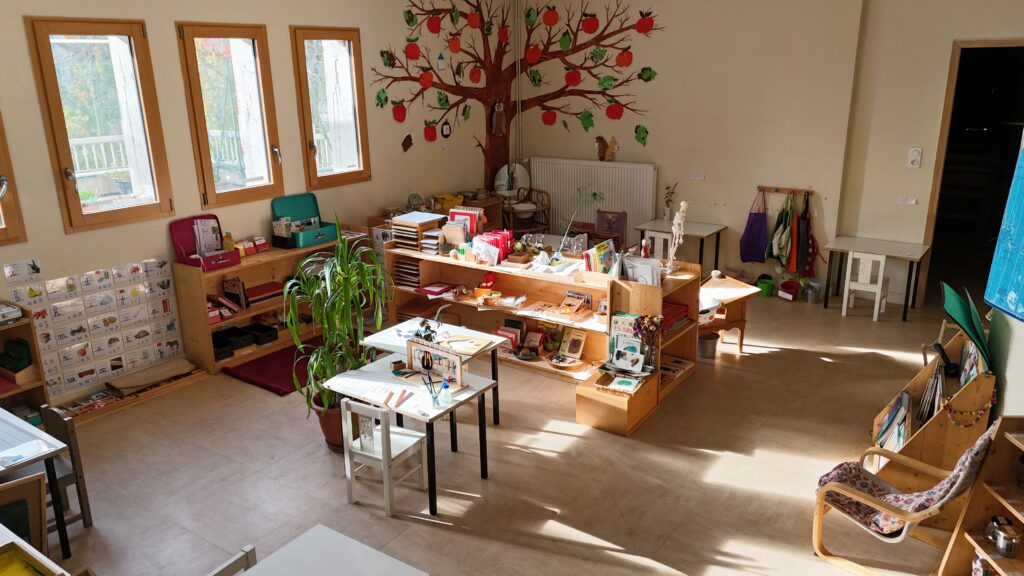
Each child moves at their own pace, guided by educators who know them well. The environment is calm, beautiful, and intentional. And while freedom is real here, it always exists within a clear and thoughtful structure.
A place children actually want to be in
- A large multipurpose room for sport, movement, and collective events.
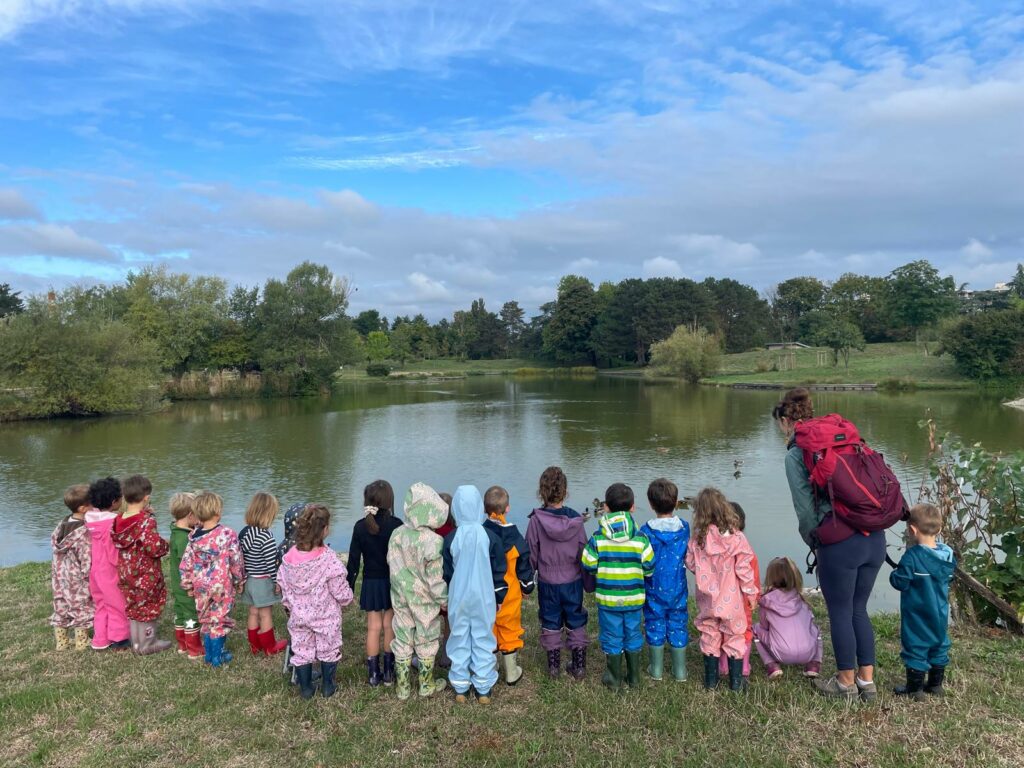
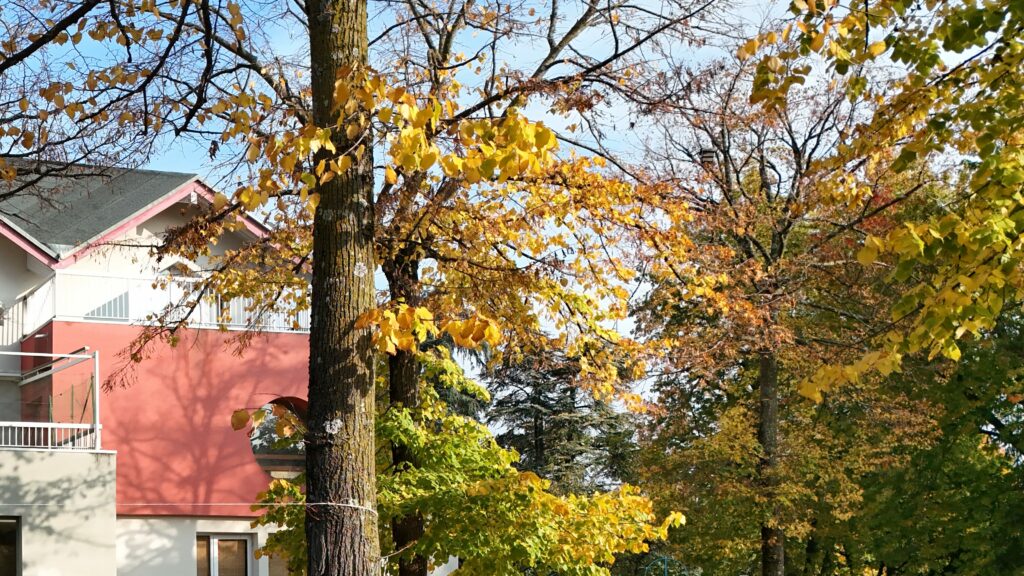
- A tree-lined courtyard for outdoor play.
- An amphitheater for performances and artistic expression.
- An on-site cafeteria.
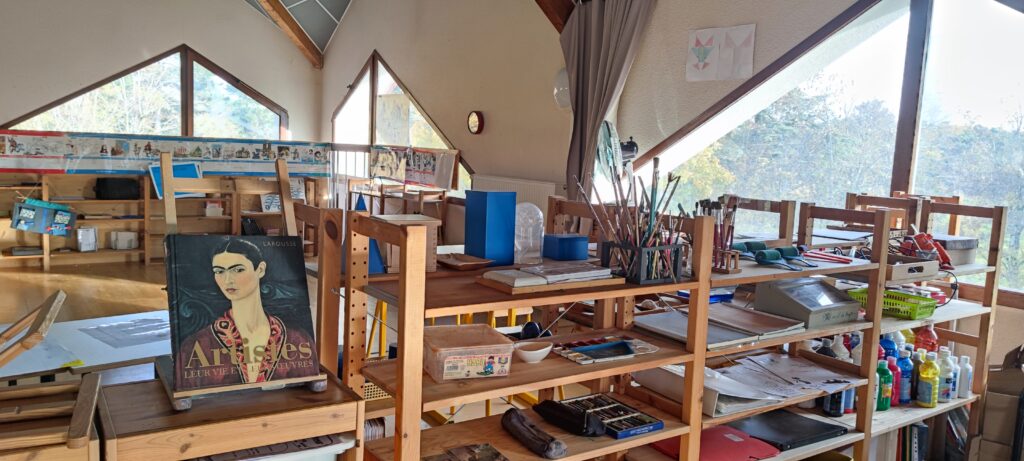
- A library, quiet corners, and an arts space.
- A vegetable garden.
Everything is on-site. Which means less logistics, more learning.


Let’s Grow Our School Together!
What families say
“Before, when I asked my son how his day went, he’d always say ‘I’ll tell you later’ and often never did. Since he joined us, he comes home smiling and tells me on his own what he learned and discovered. He even talks about what he’s looking forward to exploring tomorrow. For me, that’s all I needed to know.”
— M., parent of a 5-year-old
“What struck me most was the children’s attitude in the mornings. The few times I dropped off my grandchildren, I was amazed. It was the first time I’d ever seen children run to get into school.”
— Grandfather of two children at the school
“My children have loved every year here. The school truly lives up to its name, Children’s House. They feel completely at home.”
— L., mother of children aged 4 and 6
Got questions? We probably have answers.
What about core academics, reading, writing, and math?
We follow the French national curriculum, so yes, children learn to read, write, count, and reason. What's different is the how and the when. Learning happens through hands-on, self-correcting materials rather than direct instruction. And instead of expecting every child to hit the same milestone in the same month, we work in three-year cycles.
Children have time to truly learn, and they usually go further than expected.
How is progress tracked without grades?
Closely. Educators observe each child every day and keep a detailed individual record. Families receive regular updates, and every trimester children choose which activities to share with their parents during an open classroom session. It's a moment most parents really look forward to.
No rankings, no grades, but rigorous and personal tracking.
What if my child goes back to a conventional school?
It happens, and they do just fine. Children who leave tend to adapt quickly, because they already know how to learn, how to organize themselves, and how to work independently. We also prepare the transition with the child and family well in advance, so nobody goes in blind.
How do you handle emotions, conflicts, and getting along?
As part of everyday life, not as a problem to solve. Children learn to name what they feel, express it, and listen to others. All our educators are trained in Nonviolent Communication, so the approach is consistent across every age group. The result is a classroom where conflicts get resolved, not suppressed, and where children genuinely learn to be with each other.
Is it right for gifted children, highly sensitive kids, or very reserved ones?
Often, yes. Montessori tends to work particularly well for children who don't thrive in a competitive or noisy environment, who have strong interests, or who develop unevenly. We speak with every family before enrollment to make sure the fit is right, and when it is, these children often flourish here.
What if my child isn't potty-trained yet?
Not a problem. We welcome children as they are, and potty training is not a requirement to enroll. Bathrooms are located directly within the classrooms, which helps a lot. The process unfolds at each child's own pace, with support and zero pressure.
Do you follow an official curriculum?
Yes. Children acquire all the competencies of the French national curriculum. The difference is that instead of a month-by-month program, we work in three-year cycles. That gives children time to genuinely integrate what they learn, rather than move on before they're ready. And in practice, most of our children go beyond what the curriculum expects. The school is regularly inspected by the national education authority.
Are your educators qualified?
Yes. All educators hold Montessori training for their specific age group, and keep developing through ongoing professional development in observation, group dynamics, Nonviolent Communication, and neurodevelopment. Many also bring experience from previous careers, which adds a lot to the team. And we work hard to keep that team stable, because consistent relationships matter enormously to children.
Is there a cafeteria? After-school care?
Yes. Children can have lunch on-site, in an age-appropriate setting. After-school care is available at midday and in the evening. Full details are on the Contact page.
What are the fees?
Tuition is calculated based on household income, to keep the school accessible to as many families as possible. Full details, including a simulator, are on the Fees and Enrollment page.
Which school calendar do you follow?
We follow the official calendar for the Auvergne-Rhône-Alpes academic region, Zone A, aligned with the academies of Clermont-Ferrand, Grenoble, and Lyon.
Ready to find out if we’re the right fit?
Every year, we welcome new families ready to imagine a different kind of school. Come to an Open House, join a monthly Parent Café, or simply get in touch. We’d love to hear from you.
For families who are looking for something different.