
Small hands, big discoveries
Between 2 and 4, everything is new. Their body, language, relationships, and the growing urge to do things on their own.
Our Toddler House is designed to support this stage with warmth, structure, and care.
Children learn from each other here, just by being together. Watching, copying, trying.

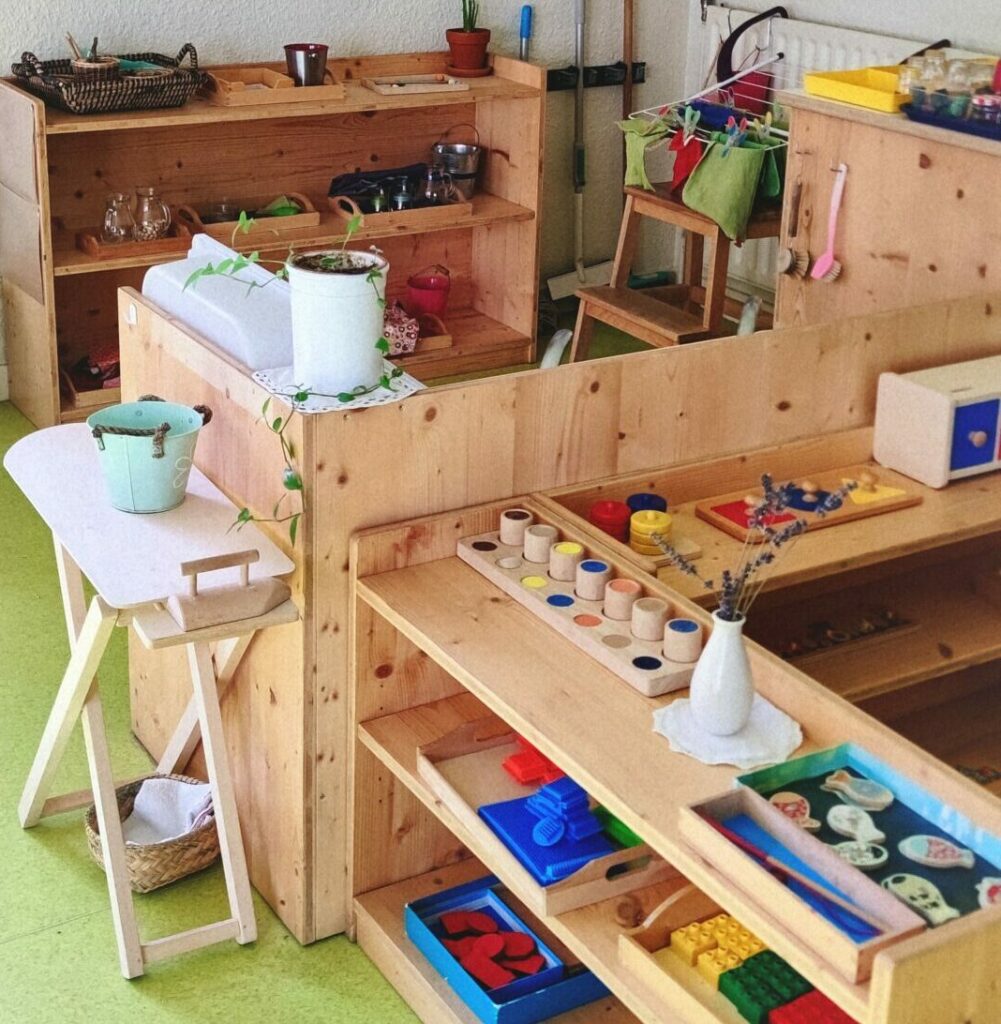
A Montessori environment built for their age
Everything in the Toddler House is designed for this specific age. The materials, the space, the rhythm. All of it built to support free exploration and growing independence.
- Everything at child height. Furniture, shelves, materials, all within reach.
- One of each activity. Children learn to wait, observe, and choose.
- Every activity has a clear purpose. Useful for the child, the environment, or others.
- Built-in error control. Children spot and correct their own mistakes, building confidence as they go.
- A calming atmosphere. Ritualized days, natural light, natural materials, a gentle rhythm.
A day in the Toddler House


Work time, morning and afternoon
Two-year-olds choosing their own activities. It sounds simple. It’s actually remarkable.
- Practical life: pouring, folding, buttoning, wiping a table.
- Sensory: textures, sounds, shapes, colors.
- Fine motor skills: threading, transferring, screwing and unscrewing.
- Imitation play: feeding a doll, preparing a meal, cleaning up.
Every activity builds independence, concentration, and self-confidence.
Snack time
Twice a day, around 9:45 and 4pm. Children help prepare it: cutting fruit, pouring water, wiping the table. Small gestures that make them part of the day, not just passengers.
Group time
Stories, songs, nursery rhymes, music, conversation. A daily moment to connect, listen, and find joy in being together. No obligation to join right away. Children come in when they’re ready.
Outside time
Sand, slides, water play, building, bug-watching. Room to run, climb, breathe, and be amazed.
Physical play
Obstacle courses, balance, coordination, simple group games. Children explore what their bodies can do.
Winding down
Before lunch, a gentle transition. Stories, soft songs, the silence game. A moment to settle before the next part of the day.
Lunchtime
Not just eating. Setting the table, choosing a seat, serving themselves, pouring their own water, using cutlery, clearing up, washing their hands and face. At 2 years old, lunch is a full activity.
Nap time
Each child’s rest is respected and adapted to their needs, in a calm and cozy space right next to the classroom. Not just recovery. It’s when the morning’s learning settles in.
Art time
Paint, clay, collage. Free creation, where imagination and the joy of making something take center stage.
Taking care of things
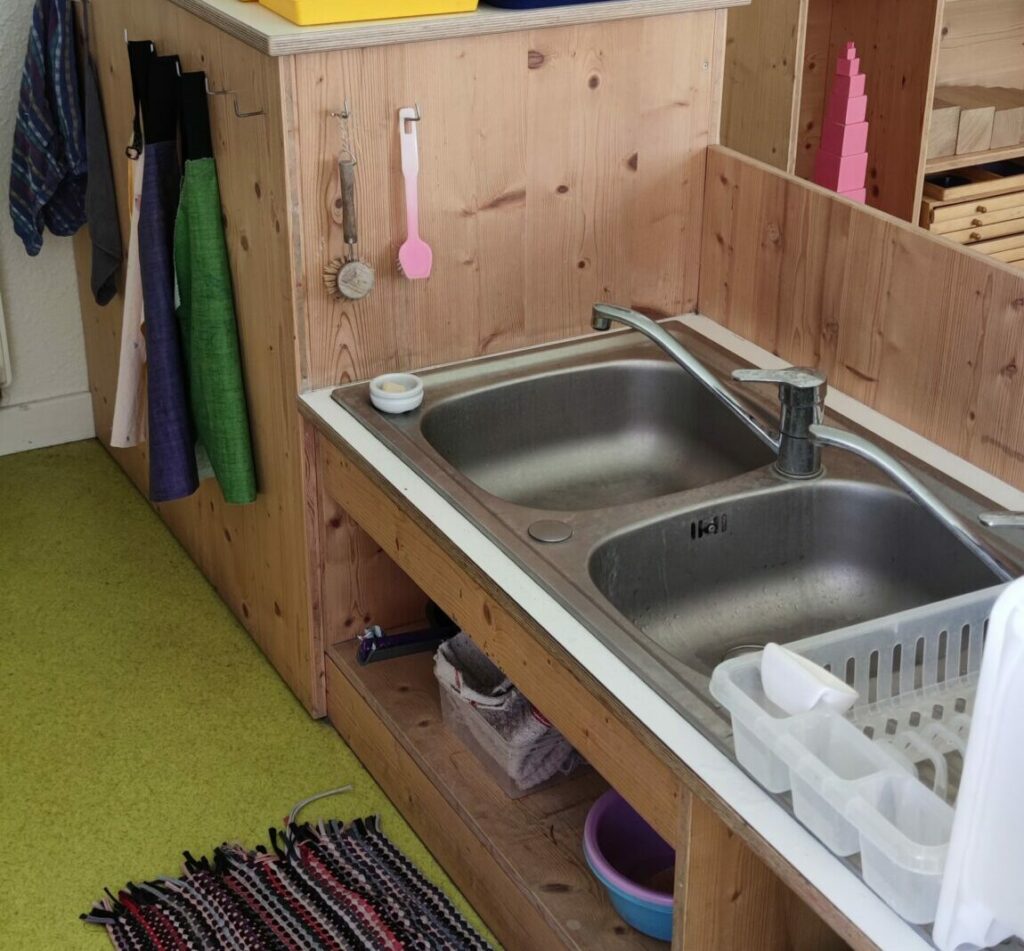
Throughout the day, children wash their dishes, pour their own water, wipe a table, watch others. Little by little, they learn to take care of themselves and their space.

A typical day here
| Time | Activity |
|---|---|
| 08:20 – 08:30am | Personalized welcome |
| 08:30 – 09:30am | Independent workshops (individual and group presentations), cooking or arts and crafts, phonics activities |
| 09:30 – 09:50am | Changing time, toilet break, handwashing |
| 09:50 – 10:15am | Snack time, group time: storytelling, reading, music, dance, nursery rhymes |
| 10:15 – 10:45am | Physical activity |
| 10:45 – 11:00am | Setting up lunch tables, getting ready for the meal |
| 11:00 – 11:15am | Group time: oral expression, silence game |
| 11:15 – 12:00pm | Handwashing, lunch |
| 12:00 – 12:15pm | Face and hand care |
| 12:15 – 1:00pm | Outdoor play |
| 1:00 – 1:20pm | Changing time, toilet break |
| 1:20 – 1:30pm | Nap preparation, reading, quiet time |
| 1:30 – 3:30pm | Nap |
| 3:30 – 3:40pm | Changing time, toilet break |
| 3:40 – 4:00pm | Arts and crafts |
| 4:00 – 4:30 | Handwashing, snack, group time: reading, independent dressing |
| 4:30 – 4:45 | End of day, parents arrive |
What families say
“What we appreciate, beyond the environment, is the quality of the exchanges with the team. We receive regular and detailed feedback. When something isn’t right, it’s said transparently and kindly. And when everything is going well, we know that too. You can tell the educators truly know our son, and that they support him without rushing him.”
— G., parent of a 2.5-year-old
“Our daughter was just over 2 when she joined the class. It was her first real separation, so we were a little apprehensive. But the team welcomed her with a lot of gentleness, and she felt confident quite quickly. Today she arrives in the morning with a smile, and leaves with one too. As parents, that reassures us enormously.”
— T., parent of a 3-year-old
Got questions? We probably have answers.
What about core academics, reading, writing, and math?
We follow the French national curriculum, so yes, children learn to read, write, count, and reason. What's different is the how and the when. Learning happens through hands-on, self-correcting materials rather than direct instruction. And instead of expecting every child to hit the same milestone in the same month, we work in three-year cycles.
Children have time to truly learn, and they usually go further than expected.
How is progress tracked without grades?
Closely. Educators observe each child every day and keep a detailed individual record. Families receive regular updates, and every trimester children choose which activities to share with their parents during an open classroom session. It's a moment most parents really look forward to.
No rankings, no grades, but rigorous and personal tracking.
What if my child goes back to a conventional school?
It happens, and they do just fine. Children who leave tend to adapt quickly, because they already know how to learn, how to organize themselves, and how to work independently. We also prepare the transition with the child and family well in advance, so nobody goes in blind.
How do you handle emotions, conflicts, and getting along?
As part of everyday life, not as a problem to solve. Children learn to name what they feel, express it, and listen to others. All our educators are trained in Nonviolent Communication, so the approach is consistent across every age group. The result is a classroom where conflicts get resolved, not suppressed, and where children genuinely learn to be with each other.
Is it right for gifted children, highly sensitive kids, or very reserved ones?
Often, yes. Montessori tends to work particularly well for children who don't thrive in a competitive or noisy environment, who have strong interests, or who develop unevenly. We speak with every family before enrollment to make sure the fit is right, and when it is, these children often flourish here.
What if my child isn't potty-trained yet?
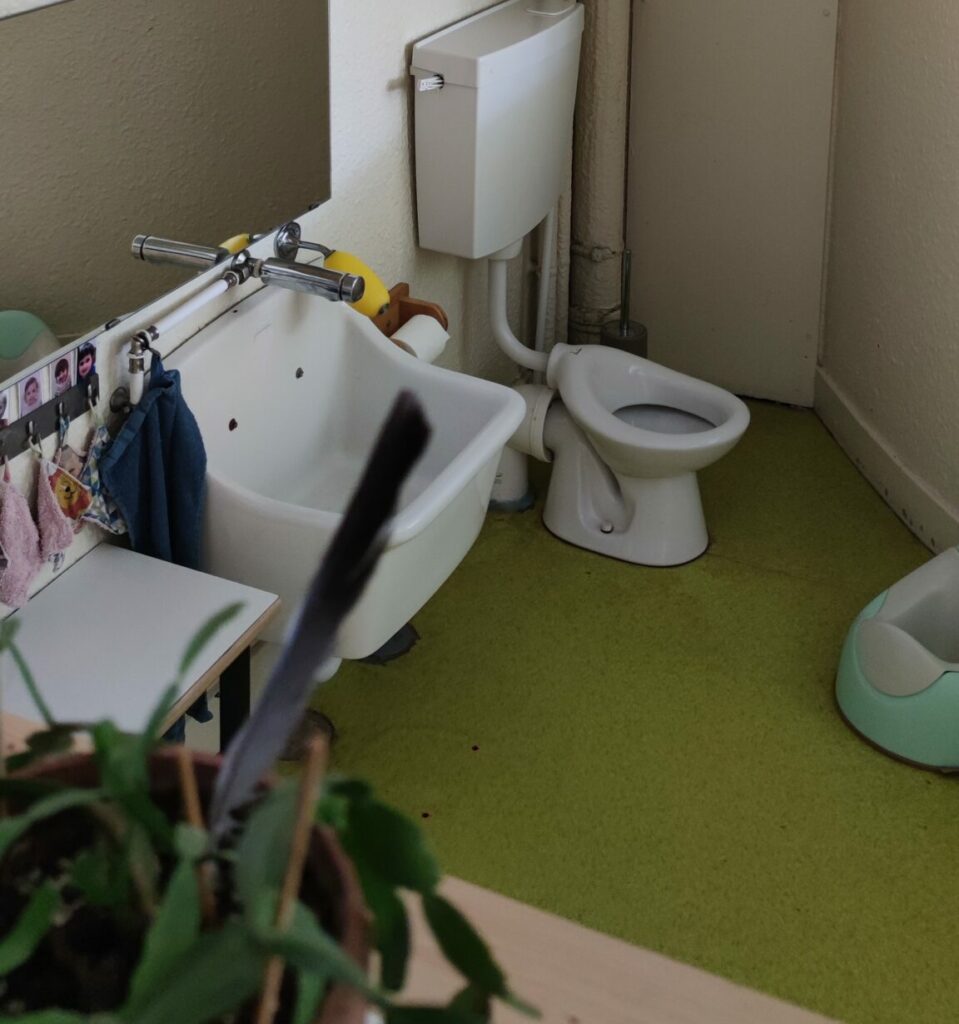
Not a problem. We welcome children as they are, and potty training is not a requirement to enroll. Bathrooms are located directly within the classrooms, which helps a lot. The process unfolds at each child's own pace, with support and zero pressure.
Do you follow an official curriculum?
Yes. Children acquire all the competencies of the French national curriculum. The difference is that instead of a month-by-month program, we work in three-year cycles. That gives children time to genuinely integrate what they learn, rather than move on before they're ready. And in practice, most of our children go beyond what the curriculum expects. The school is regularly inspected by the national education authority.
Are your educators qualified?
Yes. All educators hold Montessori training for their specific age group, and keep developing through ongoing professional development in observation, group dynamics, Nonviolent Communication, and neurodevelopment. Many also bring experience from previous careers, which adds a lot to the team. And we work hard to keep that team stable, because consistent relationships matter enormously to children. You can learn more about our Teaching Team here.
Is there a cafeteria? After-school care?
Yes. Children can have lunch on-site, in an age-appropriate setting. After-school care is available at midday and in the evening. Full details are on the Practical Info & Contact page.
What are the fees?
Tuition is calculated based on household income, to keep the school accessible to as many families as possible. Full details, including a simulator, are on the Tuition and Enrollment page.
Which school calendar do you follow?
We follow the official calendar for the Auvergne-Rhône-Alpes academic region, Zone A, aligned with the academies of Clermont-Ferrand, Grenoble, and Lyon.
Want to see it for yourself?
Nothing beats a visit. Come and discover the Toddler House at an Open House, or simply get in touch.